
3D Architectural Visualization Prices: The Complete 2026 Global Guide

How much does 3D architectural visualization cost in 2026?
3D architectural visualization prices in 2026 typically range from $150–$500 per image for budget-tier renders, $500–$3,000 per image for professional mid-range studios, and $1,500–$6,000+ per image for premium boutique studios serving luxury developments. Animation runs $80–$600+ per second depending on quality tier, and VR experiences typically cost $15,000–$30,000+ per project. Pricing varies significantly by region, studio tier, and project complexity.
If you've requested quotes for 3D architectural visualization, you've likely encountered a frustrating pattern: one studio quotes $300 per image, another quotes $2,500 for what appears to be the same service, and a third wants $6,000. This isn't inconsistent pricing — it reflects one of the least standardized categories in the entire design services industry.
For real estate developers, architects, and property marketers planning a 2026 project, understanding what drives this variation — and what you should actually expect to pay — is essential for budgeting accurately and avoiding both overpayment and false economy.
This guide breaks down 3D architectural visualization prices globally in 2026 — covering exterior and interior renders, animation, and VR experiences, with real pricing data across the US, UK, UAE, Europe, and Asia. We'll explain what drives cost up or down, how to budget effectively, and how to avoid the hidden fees that catch developers off guard.
What's in This Guide:
- Why 3D Visualization Pricing Varies So Dramatically
- Global Pricing Tiers: Budget, Professional, Premium
- 2026 Pricing by Visualization Type
- Regional Pricing: US, UK, UAE, Europe, Asia
- What Actually Drives the Final Price
- Pricing Models: How Studios Structure Fees
- Hidden Costs to Watch For
- How to Budget: Practical Guidelines by Project Type
- The ROI Case: Why Quality Visualization Pays for Itself
- How to Choose the Right Studio
- FAQ
1. Why 3D Visualization Pricing Varies So Dramatically
Unlike buying a standardized product, architectural visualization is a custom creative service. The final price depends on a combination of factors that compound quickly: project complexity, studio location, the artist's experience level, output resolution, revision allowances, and turnaround time all shift the number significantly.
A simple exterior render of a modest residential home requires a fraction of the work involved in a photorealistic visualization of a complex mixed-use tower with detailed facades, custom landscaping, and full urban context. The more intricate the architecture, the more modeling, texturing, and rendering time is required — and cost scales accordingly.
Regional labor rates add another layer of variation. Studios in Eastern Europe and South/Southeast Asia typically operate at $30–$80/hour, while studios in the US and Western Europe charge $100–$200/hour. This alone explains much of the price gap between a $250 rendering and a $2,500 rendering of similar visual complexity.
2. Global Pricing Tiers: Budget, Professional, Premium
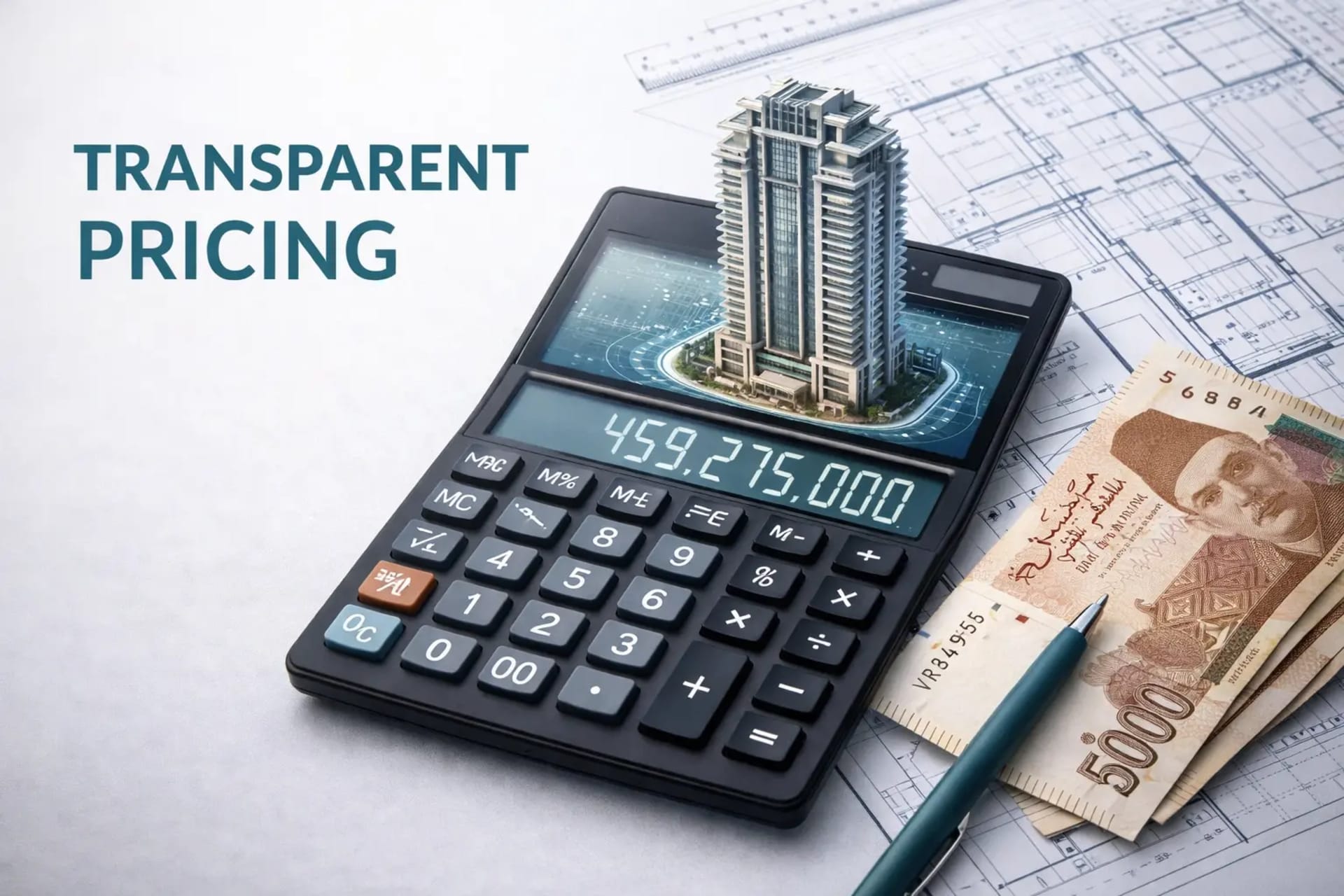
The global 3D visualization market sorts into three broad tiers:
Budget Tier
$150 – $500 / image
Professional Tier
$500 – $3,000 / image
Premium / Boutique Tier
$1,500 – $6,000+ / image
Price alone is not a reliable indicator of quality. An experienced studio charging $400 can outperform an inexperienced provider charging $1,500. Portfolio depth and process discipline matter more than the headline number.
3. 2026 Pricing by Visualization Type

| Type | Budget | Professional | Premium |
|---|---|---|---|
| Exterior render (still) | $150–$500 | $700–$2,000 | $1,500–$3,500+ |
| Interior render (still) | $150–$400 | $500–$1,800 | $1,200–$3,000 |
| Floor plan (3D) | $100–$250 | $250–$600 | $600–$1,200 |
| Aerial / drone view | $300–$700 | $800–$2,000 | $2,000–$4,000+ |
| Animation (per second) | $20–$50 | $80–$200 | $300–$600+ |
| 60-sec walkthrough film | $1,500–$3,000 | $5,000–$12,000 | $15,000–$22,000+ |
| 360° virtual tour (per panorama) | $200–$600 | $700–$2,000 | $2,000–$5,000 |
| VR architectural experience | $5,000–$12,000 | $12,000–$25,000 | $25,000–$30,000+ |
Animation and VR pricing scales differently than stills — because one second of video requires 24–30 individually rendered frames, and VR requires real-time optimization across devices. This is why a 60-second walkthrough film can cost more than ten static exterior renders combined.
For real estate developers evaluating a full interactive sales platform rather than static renders, see our guide: How Much Does a 3D Property Walkthrough Platform Cost? →
4. Regional Pricing: US, UK, UAE, Europe, Asia

United States / Canada
$700 – $2,500 / image
Major hubs (New York, Miami, LA, Toronto) command premium rates. Full residential packages (4–6 exterior/interior views): $1,800–$4,500. Commercial animation: $8,000–$15,000+ per minute.
United Kingdom
£500 – £5,000+ / image
London commands premium pricing given intense competition among new-build marketing. Regional UK studios offer more moderate rates. Overseas-buyer-focused developments typically invest in the higher end of this range.
UAE / Dubai
$1,200 – $3,000 / image
Dubai's market demands "wow factor" — luxury developments require complex lighting, animation, and VR alongside stills. Global studios and strong local providers both compete here, keeping quality high across price points.
Europe (DACH region)
€400 – €3,500 / image
Austria and Germany show strong demand from developers pre-selling residential units off-plan. Premium studios in Germany charge comparable rates to Austria; entry-level pricing is more competitive in larger markets.
South Asia / Southeast Asia
$150 – $900 / image
Home to many budget-tier studios, but also increasingly capable professional-tier providers delivering work comparable to Western studios at 50–70% lower cost — a major reason international developers increasingly source visualization from this region.
Saudi Arabia / GCC
$1,000 – $3,500 / image
Vision 2030-scale developments (NEOM, ROSHN) require premium-tier visualization to match global investor expectations, pushing average project budgets toward the higher end.
A key dynamic in 2026: the gap between "cheap" and "quality" visualization is less about geography than it once was. Top-tier studios in South Asia and Eastern Europe now regularly produce work indistinguishable from premium Western studios — while charging significantly less. Studio selection, not studio location, is the more reliable predictor of quality.
5. What Actually Drives the Final Price
Project complexity — A standard residential exterior might take a skilled artist 8–12 hours; a contemporary building with unique geometry, custom landscaping, and water features can require 25–40+ hours.
Output resolution — Web-resolution images cost less than billboard-ready, ultra-high-resolution outputs for large-format print marketing.
Revision rounds — Most packages include 1–3 revision rounds. Additional rounds typically cost $50–$300+ depending on complexity.
Turnaround time — Standard timelines run 5–14 business days for stills. Rush delivery (24–48 hours) typically adds 25–50% to the base price.
Studio location and overhead — A studio with senior artists, dedicated project management, and international quality standards charges more than a solo freelancer — reflecting genuinely different capacity and reliability.
Portfolio and experience — Studios with proven track records, international clients, and award-winning work command premium rates — translating into fewer revision cycles and stronger architectural understanding.
6. Pricing Models: How Studios Structure Fees
Per-image pricing — Fixed rate per rendered image. Predictable, easy to compare across quotes. Best for well-defined scopes with specific views required.
Package pricing — Bundled services at a discount — typically 15–30% cheaper than ordering individually. Best for larger projects needing multiple visualization types.
Per-project fixed fee — A single all-inclusive quote covering renderings, animation, and revisions. Best for large, multi-phase developments requiring a comprehensive strategy.
Hourly rate — Common for consulting or undefined scopes. Global range: $30–$80/hour (Eastern Europe, Asia) to $100–$200/hour (US, Western Europe). Best for exploratory or advisory work with evolving requirements.
7. Hidden Costs to Watch For
| Item | Typical Extra Cost |
|---|---|
| Extra revision rounds (beyond included) | $50 – $300+ per round |
| Rush delivery (24–48hr) | +25% – 50% of base price |
| Source file / 3D model delivery | +30% – 50% of project cost |
| Extended usage / resale rights | Negotiated separately |
| Additional output formats | Small per-format fee |
Always clarify these items in your quote before committing — the headline per-image price rarely tells the complete story.
8. How to Budget: Practical Guidelines by Project Type
Single custom home (architect-led)
$1,800 – $4,500
4–6 images across exterior and interior views, professional tier.
Medium residential development
$8,000 – $20,000
6–8 exterior/interior views, 2 floor plans, basic 30–60 second animation.
Large multi-unit / high-rise
$25,000 – $60,000+
8–12 exterior views, 12–20 interior views, full floor plan set, cinematic animation, virtual staging.
Commercial development
$15,000 – $80,000+
Extensive stills, multiple tours, day-to-night studies, tenant buildout visualization.
Rule of thumb: allocate approximately 0.5%–1.5% of your total marketing budget to visualization — a proportion that consistently delivers strong ROI relative to its cost.
9. The ROI Case: Why Quality Visualization Pays for Itself
A $3,000 rendering that helps sell a $2,000,000 apartment can represent an ROI well beyond 60,000% — because for the first 12–24 months of an off-plan campaign, the visualization is the product buyers experience. Quality visuals reduce time-on-market, support 3–9% higher achieved pricing, and generate significantly higher engagement than standard listings.
For developers evaluating a full interactive sales platform beyond static renders — the natural next step for off-plan campaigns — read: What is a 3D Sales App? →
10. How to Choose the Right Studio
Review the portfolio critically — Is it photorealistic or amateur? Relevant to your project type? Recently updated?
Request itemized quotes — Compare scope, revision policy, and payment terms — not just the headline price.
Check references — Ask previous clients about timeliness, revision handling, and whether they'd hire the studio again.
Start small if uncertain — Commission one or two images before a full-scale engagement with a new studio.
Get a Transparent Quote for Your Project
Intwopixel delivers photorealistic 3D visualization and full interactive sales platforms for developers worldwide. Tell us about your project — we'll give you an honest, project-specific quote.
Schedule a Free Consultation →Frequently Asked Questions
What is the average price of 3D architectural visualization in 2026?
Globally, professional-tier 3D architectural visualization averages $500–$3,000 per image in 2026, with budget options from $150 and premium boutique work reaching $6,000+ per image. The right benchmark depends on your market, development positioning, and intended use (concept approval vs. luxury marketing).
Why do 3D rendering quotes vary so much between studios?
Price differences reflect studio tier, regional labor rates, artist experience, and process maturity — not just the visual complexity of the request. A $250 quote and a $2,500 quote for a similar-looking image often reflect very different studio capacity, reliability, and revision support.
Is it worth paying more for a premium studio?
For flagship or luxury developments, yes — premium visuals directly support pricing power and buyer confidence at the value tier where it matters most. For early concept validation or regulatory approvals, budget-tier visualization is often sufficient. Match spend to purpose rather than defaulting to the most expensive option.
How much does 3D animation cost compared to still renders?
Animation costs significantly more because each second of video requires 24–30 individually rendered frames. Standard architectural animation runs $80–$200 per second ($5,000–$12,000 for a 60-second film), while cinematic, high-end commercial work runs $300–$600+ per second.
What percentage of marketing budget should go to visualization?
Most established developers allocate 0.5%–1.5% of total marketing budget to visualization. For a $5M marketing budget, this represents $25,000–$75,000 — consistent with professional and premium-tier pricing for a full development marketing package.
Do I own the 3D models used to create my renders?
Typically no — standard agreements grant usage rights for the rendered images, while underlying 3D model files remain the studio's intellectual property. If you need ownership of source files for future modifications, expect an additional 30–50% fee.
Should I choose a local or international visualization studio?
Both can work well. Local studios offer easier communication and site visit capability. International or offshore studios — particularly in South Asia and Eastern Europe — often deliver comparable quality at 30–70% lower cost, making them a strong option for developers focused on maximizing marketing ROI.
What's the difference between static rendering and an interactive 3D sales platform?
Static renders and animation are marketing assets — images and videos. An interactive 3D sales platform is a browser-based application buyers navigate themselves, exploring specific units, floors, and views in real time, typically with CRM integration. For off-plan developers, the platform is the more powerful sales tool. Read: What is a 3D Sales App? →
Ready to Turn Your Architectural Vision Into Compelling Visuals?
500+ platforms and visualizations delivered globally. Transparent pricing, no hidden fees. Free consultation.
Schedule a Free Consultation →See Intwopixel's 3D Sales Platform in Action
Book a free demo and see how leading real estate developers use Intwopixel to pre-sell off-plan units before construction begins.
Latest Blogs
View All Blogs →![What is a 3D Sales App for Real Estate? Complete Guide [2026]](https://res.cloudinary.com/doyx8ejwf/image/upload/f_auto,q_auto,w_1920/v1780315420/Hero_1200x630_wi6aym.webp)
What is a 3D Sales App for Real Estate? Complete Guide [2026]
A 3D sales app lets property developers showcase off-plan units with interactive walkthroughs before construction. See how leading developers use it to pre-sell faster.![3D Property Walkthrough Platform Cost: $10k–$50k Breakdown [2026]](https://res.cloudinary.com/doyx8ejwf/image/upload/f_auto,q_auto,w_1920/v1781091724/Image_1_Banner_jyeki0.webp)
3D Property Walkthrough Platform Cost: $10k–$50k Breakdown [2026]
How much does a 3D property walkthrough platform cost? We break down pricing by project size, features, and region — from $10,000 basic builds to $50,000+ enterprise solutions.
3D Property Walkthrough vs Matterport: Developer's Guide (2026)
Matterport vs interactive 3D property walkthrough platforms — honest 2026 comparison for real estate developers. Pricing, use cases, limitations, and which one actually sells off-plan properties.Developer & Investor Insights
Practical guidance for real estate developers worldwide on using interactive 3D visualization to sell off-plan properties faster and more effectively.
3D & Visualization Strategies
How architectural renders, interactive 3D walkthroughs, and virtual property tours influence buyer decisions in the global off-plan market.
Real Estate Sales Intelligence
Data-driven insights on buyer behavior, off-plan pricing psychology, and digital sales strategies for real estate developers worldwide.
Let's connect
Struggling to explain your project to buyers? Our interactive 3D walkthroughs make it easy to visualize every unit, view, and layout — before construction even begins. Share your details and we’ll guide you.
